Compare 235/65R17 vs 255/55R19 to see differences in overall diameter, width, sidewall height, circumference, speedometer accuracy, and real-world fitment im…
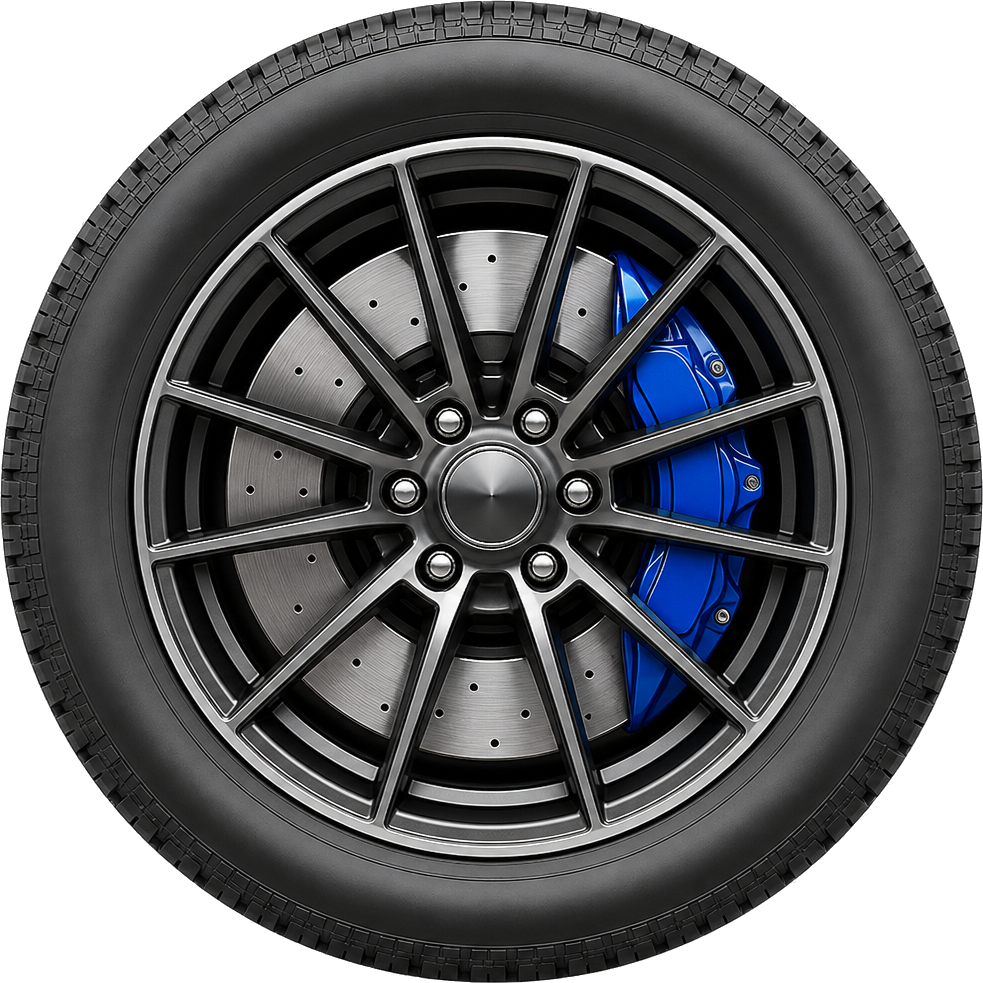
235/65R17Current Tire
→
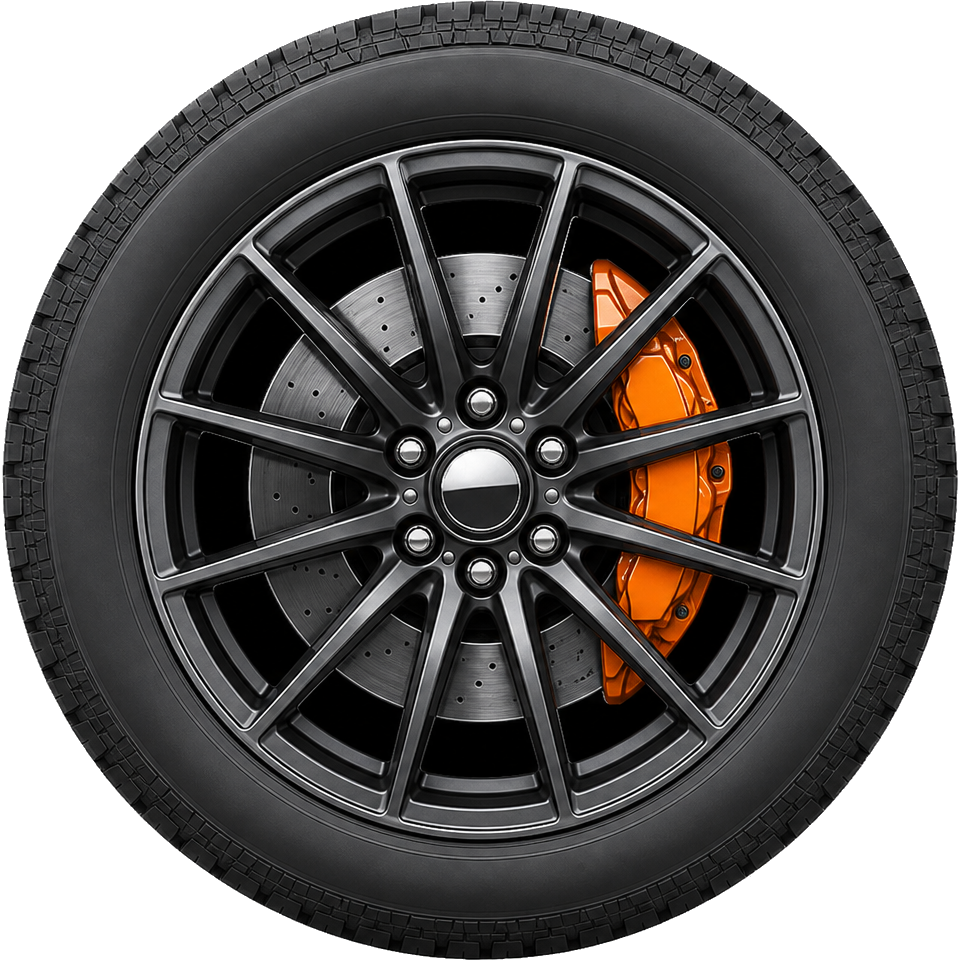
255/55R19New Tire
Diameter: +3.50%Width: +8.51%Speedometer: +3.50%
Overall Diameter
+1.02"
+3.50%
Width
+0.79"
+8.51%
Sidewall Height
−0.49"
-8.18%
Circumference
+3.19"
+3.50%
Speedometer Error
+3.50%
62.1 mph true
Revs Per Mile
−23
-3.38%
235/65R17
Circumference: 91.19"
255/55R19
Circumference: 94.38"
Understanding This Tire Size Difference
Moving from 235/65R17 to 255/55R19 changes three independent geometric variables that compound on the vehicle. The summary bar and spec table quantify those deltas; this section explains the mechanical relationships behind them. The larger overall diameter lengthens rolling circumference. That single change simultaneously raises static ride height under the axle centerline, slows wheel revolutions for a given road speed, and shifts speedometer and odometer readings because the cluster assumes the factory tire covers less ground per revolution. Effective gearing also lengthens — the drivetrain turns fewer times per mile, which typically drops cruising engine speed but can soften throttle response from a stop. The sidewall shortens relative to the reference tire. Less air volume between bead and tread means less vertical compliance — road texture and sharp impacts transfer more directly to the suspension. The shorter sidewall limits tread squirm under lateral load, which generally firms steering response on smooth pavement at the cost of a harsher ride over broken surfaces. Section width grows, widening the contact patch and increasing the scrub radius at full steering lock. That typically adds steering effort and can make the tire more sensitive to road crown and groove tracking, even when diameter and sidewall height are held constant. Diameter and width together define the tire envelope — the three-dimensional space the assembly occupies as the suspension cycles and the steering rack reaches full lock. A change in one dimension without the other still alters clearance to the fender lip, inner liner, strut tower, and pinch weld. Wheel offset positions that envelope laterally; a tire that fits on paper can still rub if backspacing pushes the sidewall inward toward the spring perch.
Performance & Driving Impact
Speedometer Error
At 60 mph
+3.50%
True speed: 62.1 mph at 60 indicated
RPM Change
At 60 mph
−24 RPM
671 RPM on 255/55R19 (−23.5 revs/mi)
Ground Clearance
+0.51"
0.51" higher
Handling Impact
−0.49" sidewall
Aspect 65 → 55 · +20 mm width
Ride Height Change
+0.51"
Sidewall −0.49" (65 → 55 aspect)
Gearing Effect
+3.50% Dia
+23 revs/mi · taller effective gearing
Fuel Economy Impact
Based on 60 mph average
25.0MPG
Current
+0.9MPG(+3.50%)
25.9MPG
New
RPM vs Speed (60 mph)
235/65R17 255/55R19
Tire Specs Summary
Specification
Current
New
Difference
Diameter
29.03"
30.04"
+1.02" (+3.50%)
Width
9.25"
10.04"
+0.79" (+8.51%)
Sidewall
6.01"
5.52"
−0.49" (-8.18%)
Circumference
91.19"
94.38"
+3.19" (+3.50%)
Revs per Mile
694.8
671.3
−23.5 (-3.38%)
Speedo Error
—
+3.50%
At 60 mph
Diameter
Current29.03"
New30.04"
Difference+1.02" (+3.50%)
Width
Current9.25"
New10.04"
Difference+0.79" (+8.51%)
Sidewall
Current6.01"
New5.52"
Difference−0.49" (-8.18%)
Circumference
Current91.19"
New94.38"
Difference+3.19" (+3.50%)
Revs per Mile
Current694.8
New671.3
Difference−23.5 (-3.38%)
Speedo Error
Current—
New+3.50%
DifferenceAt 60 mph
Things to Consider
Mock-fit one tire at full steering lock before purchasing all four.
Cycle suspension through full compression and inspect inner liner clearance.
Plan for new 19" wheels — bead seat differs from 235/65R17.
Budget for possible trimming, revised offset, or mild lift if mock-fit shows contact.
Investigate speedometer recalibration before relying on cruise control long-term.
Match load index and speed rating to your door-placard minimum.
Common Vehicles Using These Tire Sizes
Vehicles commonly using 235/65R17
Toyota HighlanderLE · 2008–2013
Honda PilotLX · 2016–2018
Ford ExplorerXLT · 2011–2019
Nissan PathfinderSV · 2013–2020
Jeep Grand CherokeeLaredo · 2011–2020
Vehicles commonly using 255/55R19
BMW X5xDrive40i · 2019–2024
Mercedes-Benz GLE350 · 2020–2024
Audi Q7Premium · 2017–2024
Volvo XC90T6 Momentum · 2016–2024
Lexus RX350 · 2016–2022
What Changes When You Switch From 235/65R17 To 255/55R19
Switching from 235/65R17 to 255/55R19 changes more than the numbers in the spec table — it changes how the tire package moves inside your wheel well under real suspension travel. This is a substantial dimensional step. Before buying, cycle the suspension through full compression and full droop, turn the steering to lock in both directions, and inspect the inner fender liner, pinch weld, and control-arm clearance at each corner. Budget time for trimming, revised offset, or ride-height adjustment if contact is found during mock-fit. These sizes require different wheel diameters — plan on a complete wheel set matched to the new bead seat, hub bore, and brake clearance geometry, not just new rubber. After installation, plan a mixed driving relearn cycle so ABS and stability-control modules establish fresh wheel-speed baselines. If indicated speed drifts beyond your comfort band, investigate recalibration options before relying on cruise control or navigation ETA logic long-term.
Is 255/55R19 A Good Upgrade From 235/65R17?
Measured fit — score 6.5/10 for 235/65R17 → 255/55R19
Fitment score 6.5/10 — verify clearance before committing; changes are noticeable but manageable on many SUV platforms. 255/55R19 fits SUV and crossover use — comfort and family hauling matter more than track response. The taller overall diameter adds static ride height for light trails — not rock-crawling articulation. Load index 111 supports light towing when paired with appropriate vehicle ratings. Confirm load index (111), speed rating (V), and inner fender clearance on your vehicle before purchasing four tires.
Who Should Choose This Tire Size?
Choose 255/55R19 for SUV duty if the taller diameter adds light-trail clearance without exceeding your fitment tolerance. Stay on 235/65R17 if mock-fit clearance fails, speedometer error exceeds your tolerance, or fitment score 6.5/10 signals a higher-risk step for your platform.
Frequently Asked Questions
What should I inspect during a mock-fit before mounting 255/55R19?
Mount one tire on the intended wheel and install it at the corner that typically rubs first on your platform — often the front driver side on lowered or wide-track vehicles. Turn the steering to full lock in both directions while watching the gap between the tire shoulder and inner fender liner, pinch weld, and strut. Have an assistant bounce that corner through full suspension compression while you check for contact at the liner, control arm, and brake line. This comparison involves a large dimensional step — repeat the check at the rear, where the tire arc can contact the quarter panel lip under load.
How can I recalibrate the speedometer after switching to 255/55R19?
The speedometer error on this comparison exceeds the ±2–3% band most OEMs target, so recalibration is worth planning before long-term use. Dealer scan tools, manufacturer apps, and platform-specific tuners (FORScan on Ford, HP Tuners, etc.) can apply a tire-size correction factor where supported. Aftermarket speedometer correction modules and some aftermarket clusters accept a rolling-circumference input directly. Odometer distance accumulates the same proportional error as the speedometer — factor that into lease mileage or maintenance-interval tracking if you rely on the cluster counter.
Will 255/55R19 require new wheels compared with 235/65R17?
235/65R17 mounts on a 17" wheel while 255/55R19 requires 19" — the bead seat diameter differs, so factory wheels from the current size cannot mount the new tire. Plan on a complete wheel set with correct hub bore, load rating, and brake caliper clearance for the larger or smaller rim. Plus-sizing and minus-sizing also change the brake rotor-to-wheel-barrel relationship — confirm caliper clearance before purchase.
Do I need a lift kit or fender modification to fit 255/55R19 on a vehicle currently running 235/65R17?
Large dimensional steps enlarge the tire envelope in every direction. Some vehicles need a mild lift, revised offset, or minor trimming even when the diameter change looks modest on paper. Static ride height is only half the picture: the tire moves through an arc as the suspension compresses and the steering turns. Always verify at full droop and full compression. Break-over and approach angles improve when diameter grows, but only if the tire clears the fender at maximum compression — contact at full travel negates the clearance gain.
How does switching to 255/55R19 affect ABS, traction control, and TPMS?
ABS and stability-control modules compare wheel-speed sensor inputs across all four corners. A tire with a different rolling circumference changes the expected speed ratio at any given road speed. The revolutions-per-mile shift on this comparison exceeds the ±3% wheel-speed tolerance cited by many OEMs — a brief fault code or reduced intervention is possible until the system relearns or is recalibrated. Traction control, hill-descent, and adaptive cruise systems use the same wheel-speed data — the same tolerance applies. Confirm your TPMS module supports the new size and that sensors are relearned after mounting. Some modules require a dealer tool; others relearn after a drive cycle at specified speeds.
Should I replace all four tires when moving from 235/65R17 to 255/55R19?
Mixing significantly different rolling circumferences across an axle — or between front and rear on AWD platforms — can stress differentials and confuse traction systems. The recommended approach is to replace all four tires at once when overall diameter changes meaningfully, so every corner reports a consistent wheel speed to ABS and AWD controllers. If budget requires a staggered approach, keep the most worn tires on the same axle and never mix bias-ply with radial or widely different tread depths on AWD vehicles. After installing four matching tires, rotate on the schedule in your owner's manual and recheck inflation cold — mismatched pressure mimics mismatched diameter.
How will fuel economy change with 255/55R19 versus 235/65R17?
Highway fuel use follows two tire-driven variables: cruising engine speed and rolling resistance. Both shift when overall diameter, sidewall height, or section width change — the Performance & Driving Impact section covers the directional effect on your setup. When cruising RPM drops meaningfully, the engine does less work per mile at steady speed, which tends to help highway economy. Around-town consumption also depends on tire weight, tread compound, and sidewall flex — factors not captured by diameter alone. Track a full tank on your regular commute before and after the swap. Calculated dimensions predict the direction of change, not an exact MPG figure — your driving style, terrain, and vehicle load dominate the outcome.
How does the switch from 235/65R17 to 255/55R19 affect ride quality and handling feel?
The shorter sidewall on 255/55R19 generally firms transient response and sharpens turn-in on smooth pavement, but transmits more harshness over expansion joints and potholes. Tire pressure matters as much as geometry: even a correctly sized tire feels harsh when over-inflated or vague when under-inflated. Reset to the placard cold pressure after mounting and recheck after the first hundred miles. Suspension bushings, shock condition, and alignment settings amplify or mask tire changes. If the vehicle pulls, tram-lines on grooved pavement, or shows uneven wear after the swap, schedule an alignment — especially when section width or wheel offset changed. For winter or all-season compounds, tread block design and siping influence noise and wet grip independently of the size label — compare UTQG traction ratings when choosing between brands at the same size.